


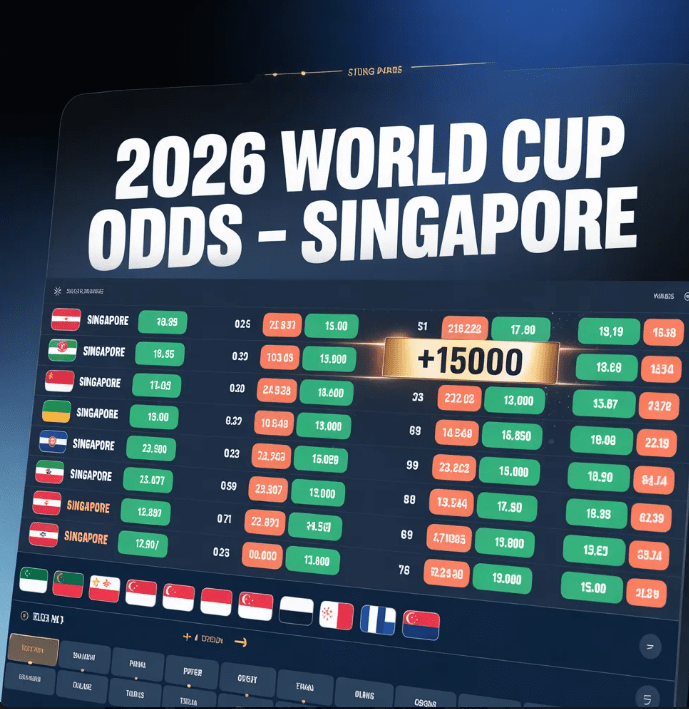
The FIFA World Cup 2026 will be one of the largest football tournaments in history. With more teams participating and matches hosted across multiple countries, global attention is expected to be extremely high. For official schedules, venues, and tournament rules, refer to the FIFA website.
In Singapore, major football tournaments often lead to increased betting activity. However, many players place bets without fully understanding how betting markets work, how odds are calculated, and how risk is structured. This guide explains how World Cup 2026 betting markets operate, the different types of bets available, how odds move, and what Singapore players should understand before participating.
This article is for educational purposes only and does not promote gambling. For regulatory guidance in Singapore, refer to the Gambling Regulatory Authority (GRA).
What Is a Betting Market?
A betting market is the range of possible outcomes that a platform allows users to wager on.
For example, in a World Cup match between Team A and Team B, a basic betting market may include:
- Team A to win
- Team B to win
- Draw
Each outcome has odds attached to it. Betting markets exist because bookmakers create structured probability models for each match. These models estimate the likelihood of different outcomes and assign prices (odds) accordingly.
During World Cup 2026, it is common for hundreds of markets to be available for a single match, covering not only the result but also goals, corners, cards, and player statistics.
Main Types of World Cup Betting Markets
World Cup tournaments usually offer several major categories of betting markets. Below is a breakdown.
A. Match Result (1X2 Market)
The match result or 1X2 market is the most basic football betting market:
- 1 – Home team wins
- X – Draw
- 2 – Away team wins
For World Cup matches played on neutral grounds, “home” and “away” usually refer only to listing order, not true home advantage. This market is simple but still involves significant uncertainty due to late goals, referee decisions, and random events.
B. Over / Under Goals
The over/under goals market predicts the total number of goals scored in a match.
Examples:
- Over 2.5 goals – 3 or more goals are scored
- Under 2.5 goals – 2 or fewer goals are scored
The line “2.5” is used so there is no tie outcome. These markets are popular because they focus on match tempo and playing style rather than which team wins.
C. Both Teams to Score (BTTS)
The Both Teams to Score (BTTS) market asks a single question:
- Yes – both teams score at least one goal
- No – at least one team fails to score
This market is often influenced by the attacking and defensive styles of the teams involved.
D. Correct Score
Correct score markets require predicting the exact final result, such as:
- 2–1
- 1–0
- 3–2
Because there are many possible scorelines, correct score markets have higher odds and much higher risk.
E. Outright Tournament Winner
Before and during the tournament, players can bet on outright markets such as:
- World Cup champion
- Tournament finalists or semi‑finalists
- Group winners
These markets stay open across the tournament, and prices move after each match as teams qualify, underperform, or are eliminated.
How Odds Work in World Cup Betting
Odds represent both probability and potential payout. On many platforms, including those commonly used by Singapore players, decimal odds are standard.
Examples (decimal odds):
- Odds 2.00 – a 10 SGD bet returns 20 SGD total (10 stake + 10 profit)
- Odds 1.50 – a 10 SGD bet returns 15 SGD total (10 stake + 5 profit)
The higher the odds, the lower the implied probability.
Illustrative implied probabilities:
- 1.50 → about 66.7%
- 2.00 → 50%
- 3.00 → 33.3%
- 5.00 → 20%
A simple formula for implied probability (decimal odds):
- Implied probability = 1 ÷ decimal odds
Bookmakers also build in a margin (house edge), so if you sum the implied probabilities of all possible outcomes in a market (for example, 1X2), the total will usually exceed 100%. That excess is how the bookmaker maintains an advantage over the long term.
How Live Betting Markets Work
Live betting (in‑play betting) allows wagers to be placed while a match is already in progress. For World Cup 2026, live markets may include:
- Next goal scorer
- Next team to score
- Updated over/under goal lines
- Live handicap or Asian handicap lines
Odds in live markets change continuously based on match developments, such as:
- Early or late goals
- Red cards and penalties
- Injuries or substitutions
- Changes in momentum
For instance, if a team scores early, the main over/under goal line may move from 2.5 to 3.5 or higher. Live betting involves much faster decisions and generally higher volatility, because multiple bets can be placed in a short time under emotional pressure.
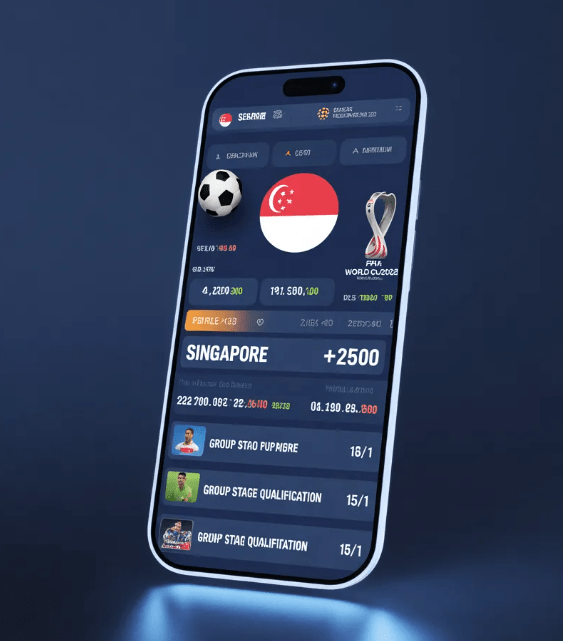
Asian Handicap Markets Explained
Asian handicap betting removes or reduces the draw outcome by applying a goal handicap to one or both teams.
Simple examples:
- Team A -1 – Team A must win by at least 2 goals for the bet to win. If they win by exactly 1, the result may be a “push” (stake refunded), depending on the line.
- Team B +1 – Team B can win or draw for the bet to win; if they lose by exactly 1, the bet may push.
These markets are popular in Asia because they balance stronger and weaker teams and adjust pricing to make more matchups attractive. However, understanding handicap rules—including quarter‑goal handicaps like -0.25 or +0.75—requires careful reading of each operator’s terms.
Special Prop Markets During the World Cup
World Cup tournaments often feature a wide variety of prop (proposition) markets, especially on larger sportsbooks. Examples include:
- First goal scorer
- Player to receive a yellow or red card
- Total number of corners
- Whether a penalty will be awarded
- Time of the first goal (for example, before/after 30 minutes)
These markets may feel more skill‑based because they allow use of player and team knowledge. However, they still depend on unpredictable match events and should be viewed as high‑variance bets.
Why Markets Change Frequently During the World Cup
World Cup tournaments are short, intense, and heavily analysed. Betting markets change due to:
- Pre‑match factors: injuries, suspensions, tactical changes, weather
- In‑tournament developments: surprise results, group‑stage shocks, form swings
- Shifts in public perception and betting volume
For example, if a favourite loses unexpectedly in the group stage, their outright winner odds may lengthen sharply, while dark horse teams that perform well may see their odds shorten. Market movement reflects both updated information and how money is flowing on each side.
Emotional Bias in Tournament Betting
Major tournaments create strong emotional reactions, which can cloud rational judgment. Common patterns include:
- Betting on a favourite national or regional team regardless of price
- Increasing stake size after a win out of overconfidence
- Chasing losses after a surprise defeat
- Making bets to “join in” with friends rather than based on considered analysis
Even if you fully understand how markets and odds work, emotional bias can still influence decisions. Recognising these patterns can help you pause before placing impulsive bets.
Legal Context in Singapore
Singapore regulates gambling under the Gambling Control Act 2022, administered by the Gambling Regulatory Authority (GRA) and other agencies.
Key points for Singapore residents:
- Remote gambling (online and mobile betting) is restricted unless specifically authorised or exempted.
- Many offshore betting platforms offering World Cup 2026 markets are not licensed in Singapore.
- Payment blocking and website blocking measures may be used against unlawful remote gambling services.
- Advertising unauthorised gambling services to persons in Singapore is restricted.
Legal overviews such as Singapore: Gambling Law – Country Comparative Guides and Gambling Legally (at Home, in Public or Online) in Singapore explain that foreign licensing alone does not make a site lawful for use in Singapore. Players should always consider the local legal framework before participating in any remote betting activity.
Payment & Withdrawal During Major Events
During World Cup tournaments, betting and payment volumes increase sharply. This can lead to:
- Higher deposit frequency and transaction volume
- Heavy traffic on betting platforms around match times
- Slower withdrawal processing due to operational load
- Additional KYC (Know Your Customer) and anti‑money‑laundering checks
These issues are often related to compliance and risk monitoring rather than pure technical failure. Players should plan their finances carefully, avoid relying on instant withdrawals for essential expenses, and expect that withdrawals during peak periods may take longer.
Risk Management During World Cup 2026
To manage risk effectively during the tournament:
- Set a fixed World Cup budget and treat it as the maximum you are prepared to lose.
- Avoid increasing stakes after losses; do not chase to recover a losing match.
- Limit the number of simultaneous or overlapping bets so you can track outcomes clearly.
- Take breaks between matches and schedule non‑betting days, especially during the group stage when multiple matches are played daily.
A busy match calendar increases temptation to place frequent bets; having clear rules helps maintain control.
Difference Between Skill and Probability
Football betting often involves analysis of:
- Team statistics and recent form
- Historical World Cup performance
- Player fitness and injuries
- Tactical approaches and coaching styles
However, football remains inherently unpredictable. Even strong favourites lose, and matches can pivot on a single moment—such as a red card, penalty, or injury‑time goal.
Understanding how markets and odds work improves awareness, but it does not remove probability or variance. No analysis can guarantee a winning outcome in a single match or even across a short tournament.
Responsible Gambling Resources in Singapore
If betting behaviour becomes difficult to control or begins to affect finances, relationships, or emotional wellbeing, support is available. In Singapore, the National Council on Problem Gambling (NCPG) provides:
- Information on responsible gambling practices
- Self‑assessment tools
- Details on counselling, helplines, and exclusion options
Seeking help early can significantly reduce the risk of long‑term financial or personal harm.
Key Takeaways
- World Cup 2026 betting markets include match results, totals, handicaps, outrights, and special props.
- Odds reflect implied probability but also include bookmaker margin, which gives the house a long‑term edge.
- Live betting and mobile access increase volatility and emotional risk.
- Singapore regulates remote gambling under the Gambling Control Act; many offshore platforms are not locally licensed.
- Understanding market structure helps with more informed decisions but does not eliminate risk.
- Responsible gambling practices and awareness of support resources are essential during major tournaments.