



biometric verification in casino apps Key Takeaways
Picture this: you are in the middle of a live blackjack hand, your balance is climbing, and the app kicks you out asking for a password reset.
- Biometric verification in casino apps reduces login time to under one second while blocking account takeover attempts.
- Facial and fingerprint recognition help operators meet strict KYC and AML compliance requirements without adding paperwork.
- Privacy concerns are real but manageable—most systems store biometric data as encrypted mathematical templates, not actual images.
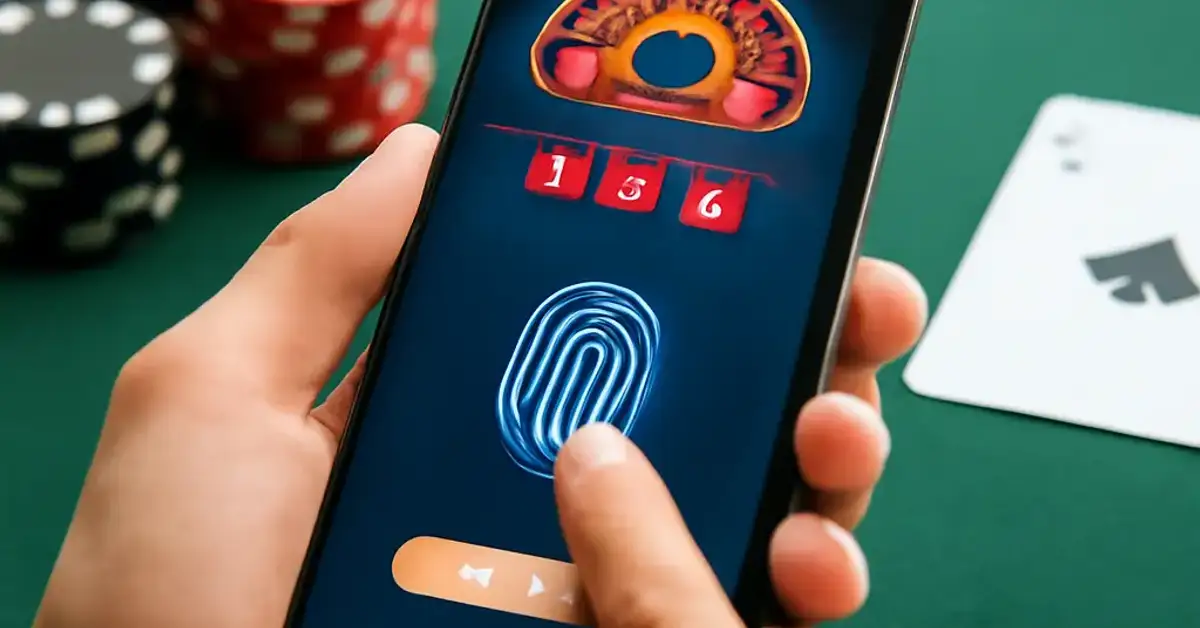
Why biometric verification in casino apps Matters for Mobile Gambling Security
Picture this: you are in the middle of a live blackjack hand, your balance is climbing, and the app kicks you out asking for a password reset. Frustrating, right? That friction is exactly why the industry is shifting toward biometrics. When players use their fingerprints or face scans to log in, the entire authentication process becomes invisible. You do not stop playing—you just keep winning.
Traditional password-based security is failing. Data breaches expose millions of credentials every year, and mobile gambling accounts are prime targets because they hold real money. Casino app security requires a solution that is both harder to hack and easier to use. Biometrics deliver exactly that by tying access to something the user is, not something they remember or carry.
The Core Methods Behind biometric verification in casino apps
Three primary biometric methods dominate the current market, each with its own strengths for mobile gambling authentication.
Fingerprint Recognition
Fingerprint sensors are now standard on most smartphones. In a casino app, a quick thumb press replaces both username and password entry. Because the sensor is integrated into the device, the biometric data never leaves the phone—a huge privacy win. Fingerprint recognition is fast, reliable, and works even in low light, making it ideal for late-night gaming sessions.
Facial Recognition
Facial recognition uses the front-facing camera to map unique facial features. Modern systems use infrared and depth mapping to prevent spoofing from photos or videos. For biometric verification in casino apps, this is particularly useful because it can be combined with liveness detection—requiring the user to blink or turn their head—to confirm a real person is present. This also supports compliance workflows where operators need to verify age and identity at account creation.
Voice Authentication
Voice biometrics analyze vocal characteristics such as pitch, cadence, and resonance. While less common in mobile gambling apps, it is emerging as a hands-free option for phone-based customer service and voice-controlled betting interfaces. A player could say “Place my bet” and the app authenticates them using their voiceprint without touching the screen.
5 Smart Benefits of biometric verification in casino apps for Operators and Players
Moving beyond passwords is not just a security upgrade; it is a strategic advantage. Here are the five key benefits that make biometrics a must-have for any serious casino app security strategy.
Benefit 1: Blazing-Fast Authentication Without Tradeoffs
Passwords take an average of 12 to 15 seconds to type and often fail on the first try due to caps-lock errors or forgotten characters. Biometric verification completes in under 500 milliseconds. For a high-stakes gambler, that speed translates directly into better gameplay. They never miss a bet because they were fumbling with a keyboard. The result is higher session retention and fewer abandoned carts during deposit flows.
Benefit 2: Superior Fraud Prevention Against Account Takeover
Credential stuffing attacks—where hackers use leaked passwords from other sites to break into casino accounts—are the single biggest threat to mobile gambling authentication. Biometrics eliminate this vulnerability entirely. Even if a hacker steals a password database, they cannot log in without the user’s unique fingerprint or face. Combined with device recognition, biometric verification in casino apps creates a multi-layer defense that stops account takeover before it starts.
Benefit 3: Streamlined KYC and Age Verification Compliance
Regulators worldwide require online casinos to verify player identity and age before allowing deposits or withdrawals. Traditional methods involve uploading scans of passports or driver’s licenses—a process that can take hours or days. Facial biometric verification can match a live selfie against the photo on an uploaded ID document in seconds. This not only speeds up onboarding but also reduces manual review costs for operators. The result is a compliant casino app security framework that does not scare away new players. For a related guide, see AI in Online Casino Platforms: 5 Smart Benefits You Must Know.
Benefit 4: Reduced Password Support Costs
Password reset requests are one of the most frequent customer support tickets in the gambling industry. Each reset conversation costs operators anywhere from $2 to $15 in agent time. By letting users authenticate with their fingerprint or face, operators can reduce password-related tickets by up to 70%. Those savings can be reinvested into better game content or higher welcome bonuses.
Benefit 5: Inclusive Accessibility for All Players
Not all players can easily type passwords. Users with motor impairments, visual disabilities, or low digital literacy often struggle with traditional login forms. Biometric verification in casino apps provides a tap-and-play experience that removes those barriers. Voice authentication, in particular, opens up mobile gambling to an entirely new demographic of players who prefer hands-free interaction.
Privacy Concerns and How Responsible biometric verification casinos Address Them
Any discussion of biometrics must confront the elephant in the room: privacy. Players worry that their face or fingerprint data could be stolen, shared, or used against them. These fears are valid, but the technology has evolved significantly.
Data Storage: Templates, Not Images
Responsible operators do not store actual fingerprint scans or face photos. Instead, the biometric sensor converts the biological data into a mathematical template—a string of numbers that represents specific features of the fingerprint or face. This template cannot be reverse-engineered to reconstruct the original image. Even if a hacker accesses the database, all they get is meaningless code.
On-Device Processing
Most modern smartphones process biometric data entirely on the device using a secure enclave or trusted execution environment. The biometric template never leaves the phone. The casino app simply receives a “yes” or “no” signal from the device’s operating system. This is a game-changer for casino app security because it means the operator never even sees the biometric data.
Opt-Out Options and Regulatory Compliance
Reputable biometric verification casinos always offer an alternative authentication method—usually a strong password or two-factor authentication via SMS. Players who are uncomfortable with biometrics can opt out completely. Additionally, the European Union’s GDPR and similar privacy laws require explicit informed consent before collecting biometric data. Operators must clearly explain how the data is used, stored, and deleted upon account closure.
Practical Implementation Tips for biometric verification in casino apps
For operators considering a rollout, here are actionable steps to get it right.
- Start with fingerprint authentication as the default because it has the widest device support and lowest friction.
- Add facial recognition as an optional upgrade, especially for high-value players who want maximum speed.
- Integrate liveness detection to prevent spoofing attacks using photos or deepfakes.
- Provide clear privacy disclosures in the app onboarding flow explaining that biometric data stays on the device.
- Test across different device models because sensor quality varies significantly between budget and premium phones.
- Monitor false rejection rates and allow users to retry or fall back to password if the sensor fails.
Future Trends: What is Next for biometric verification in casino apps
The technology is only getting more sophisticated. Behavioral biometrics—analyzing how a user types, swipes, or holds their phone—are emerging as passive authentication layers that require zero user effort. Operators are also experimenting with vein pattern recognition using infrared cameras for even greater accuracy. Meanwhile, decentralized identity systems may let players carry a single biometric profile across multiple casinos, reducing duplication and improving privacy. The next generation of casino app security will be invisible, continuous, and far more personal than anything we have today. For a related guide, see Casino and Gaming Expos: 10 Clear Benefits, Costs, and Next Steps.
Useful Resources
For deeper reading on mobile authentication standards and regulatory guidance, check out these credible sources:
- NIST Biometric Policy and Technology Guidelines – Official U.S. government framework for biometric data security and accuracy.
- UK Gambling Commission – Remote Gambling and Software Technical Standards – Regulatory requirements that include identity verification and player protection measures.
Frequently Asked Questions About biometric verification in casino apps
What is biometric verification in casino apps?
It is a security method that uses unique physical characteristics—such as fingerprints, facial features, or voice patterns—to authenticate a player’s identity when logging into a mobile gambling app.
Is biometric verification safer than a password?
Yes, biometrics are significantly safer because they cannot be guessed, stolen in a phishing attack, or reused across multiple sites. Even if a password database is breached, biometric templates stored on the device remain secure.
Can someone hack into my account using a photo of my face?
Modern facial recognition includes liveness detection technology that requires movement—blinking, smiling, or turning your head—so a static photo cannot bypass the system.
Do casino apps store my fingerprint or face image?
Reputable apps never store full images. They store a mathematical template of your biometric data, and on most smartphones the processing happens entirely on the device in a secure enclave.
Can I opt out of biometric verification and use a password instead?
Yes, all responsible casinos allow you to opt out and use traditional password or PIN authentication as your primary login method.
Does biometric verification work on older smartphones?
Fingerprint sensors are available on devices from 2015 onward, while facial recognition requires a front-facing camera. Basic functionality is possible on most devices newer than three to four years.
How fast is biometric login in a casino app?
Most biometric authentication completes in under one second, compared to 12 to 15 seconds for manual password entry, making it ideal for real-time betting scenarios.
What happens if my fingerprint sensor fails to recognize me?
Casino apps typically allow three to five retries before falling back to a password or PIN. You can also re-enroll your biometric data if the failure is persistent.
Can biometric verification be used for casino deposits and withdrawals?
Yes, many operators allow biometric authentication to authorize financial transactions, adding a layer of protection against unauthorized payments.
Do all casino apps support biometric login?
Not yet, but adoption is growing rapidly. Most major mobile casino platforms have introduced biometric options, especially for iOS (Face ID) and Android (fingerprint) users.
Is voice biometrics used in mobile gambling?
Voice biometrics are less common in mobile apps but are emerging in phone-based betting systems and future hands-free interfaces.
How does biometric verification help with underage gambling prevention?
Facial recognition combined with ID document scanning can rapidly verify a player’s age during account creation, reducing the risk of minors accessing real-money gambling.
What regulations apply to biometric data in gambling apps?
GDPR in Europe, CCPA in California, and various local gambling commissions require explicit consent, data minimization, and secure storage of biometric information.
Can I use the same biometric profile for multiple casino apps?
Currently, biometric profiles are device-specific and app-specific. Emerging decentralized identity systems may allow cross-app sharing in the future.
Does biometric verification drain my phone battery faster?
No, the impact is negligible. Fingerprint sensors use a small dedicated chip, and facial recognition uses the camera for less than a second per login.
What is the false acceptance rate for biometric systems?
Modern fingerprint and facial recognition systems have false acceptance rates below 0.001%, meaning they are extremely unlikely to mistakenly authenticate the wrong person.
Can I use biometrics if I wear heavy makeup or a face mask?
Facial recognition systems are generally robust to makeup changes, but masks can interfere if they cover key facial landmarks. Some systems now support mask detection with eye-area matching.
Do biometric casinos offer any fraud protection beyond login?
Yes, behavioral biometrics are increasingly used to detect suspicious activity during gameplay, such as unusually fast betting patterns that might indicate a bot account.
What should I do if my biometric data is compromised?
Since biometric data cannot be changed like a password, you should contact the casino immediately, disable biometric login, switch to password-only mode, and request a full account security review.
Will future casino apps rely entirely on biometrics?
It is likely that biometrics will become the primary authentication method, but password fallbacks and multi-factor combinations will remain for compliance and user choice.