



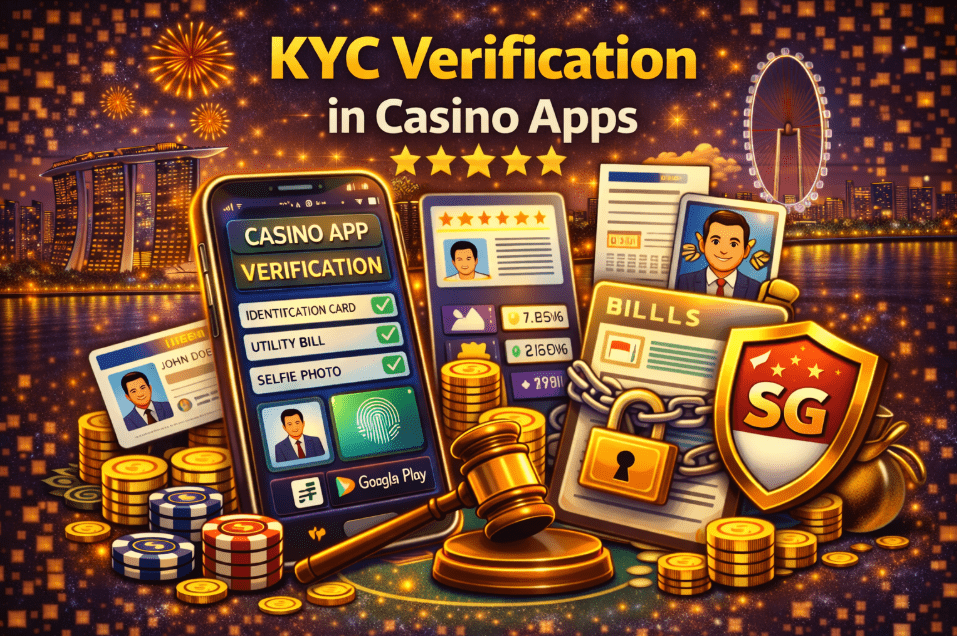
When using online casino apps, many players encounter a process called KYC verification — often at the withdrawal stage. While some view it as an inconvenience, KYC (Know Your Customer) is a core AML/CFT compliance requirement for most regulated gambling operators worldwide.
For Singapore players, understanding how KYC works is especially important. Due to strict gambling laws under the Gambling Control Act and increasing global anti‑money laundering (AML) standards, identity verification plays a major role in account approval, withdrawals, and fraud prevention.
This guide explains what KYC verification is, why casino apps require it, how it affects withdrawals, and what data protection risks users should consider. This article is educational and does not encourage gambling participation.
1. What Is KYC Verification?
KYC stands for Know Your Customer. It is a regulatory process that requires businesses to verify the identity of their users before allowing certain financial activities. In financial services, regulators such as the Monetary Authority of Singapore (MAS) require institutions to “identify and know their customers” as part of AML controls.
In casino apps, KYC verification typically occurs:
- After registration
- Before the first withdrawal
- When suspicious activity is detected
- When deposit or withdrawal thresholds are exceeded
The main purposes of KYC are to:
- Prevent money laundering and terrorism financing
- Prevent underage or self‑excluded gambling
- Detect identity fraud
- Prevent duplicate or mule accounts
- Ensure compliance with licensing regulations and AML standards
2. Why Do Casino Apps Require KYC?
Most casino apps operate under international gaming licences that impose AML/KYC obligations aligned with FATF recommendations.
KYC helps operators:
- Confirm the player is of legal gambling age
- Verify that payment methods belong to the account holder
- Detect fraudulent or high‑risk transactions
- Comply with international financial monitoring standards and local AML rules
Even offshore casino apps licensed in jurisdictions like Curacao or Malta typically implement some level of KYC process, although the strength and consistency of those controls vary by operator.
3. How KYC Applies to Singapore Players
Singapore has strict gambling regulations under the Gambling Control Act and GRA’s rules on unlawful remote gambling activities.
While most offshore casino apps are not licensed locally, they still implement KYC due to global AML expectations. Singapore users may be asked to submit:
- NRIC (or a partially masked version)
- Passport copy
- Proof of address (utility bill or bank statement)
- Selfie holding identification
Some apps may also request:
- Source‑of‑funds declaration
- Payment method verification (photo of bank card with some digits masked)
Before submitting documents, players should carefully review the operator’s:
- Privacy policy and data‑retention rules
- Data storage location and security (onshore vs offshore)
- Use of SSL encryption (HTTPS) during upload
- Licensing transparency and jurisdiction
Unlike local sectors covered directly by Singapore’s Personal Data Protection Act (PDPA), offshore gambling operators may fall outside PDPC enforcement.
4. When Does KYC Usually Happen?
Most casino apps follow three broad patterns:
- Basic KYC at registration
Some apps request ID verification immediately after account creation. This can reduce later delays but increases friction upfront. - KYC at first withdrawal (most common)
Many operators allow deposits without full verification but require KYC before processing withdrawals. This is often when players first experience delays. - Enhanced due diligence (EDD)
Triggered when:- Large withdrawals are requested
- Multiple accounts are suspected
- Unusual betting patterns appear
- Sanction or PEP (politically exposed person) risks are flagged
5. Documents Commonly Requested
Typical casino app KYC documentation includes:
| Document type | Purpose |
|---|---|
| Government ID (NRIC/passport) | Identity and age confirmation |
| Proof of address | Residency verification |
| Selfie with ID | Matching the person to the ID |
| Bank card verification | Preventing stolen card use |
| Bank statement | Source‑of‑funds and AML review |
Documents may be rejected if:
- Images are blurry or cropped
- Documents are expired
- Information does not match registration details
- Alterations or tampering are suspected
Clear, high‑resolution scans that show all four corners and uncropped details are more likely to be approved quickly.
6. How Long Does KYC Take?
Processing times vary by operator and workload:
- Basic automated verification: around 24–72 hours
- Manual review: around 3–7 days
- Enhanced review / EDD: 7+ days, depending on risk factors
Delays may occur due to:
- High withdrawal or verification volume
- Incomplete or inconsistent document submissions
- Internal compliance review backlogs
Withdrawal requests often remain “pending” until KYC is completed, which many players misinterpret as withholding funds rather than compliance processing.
7. KYC and Withdrawal Delays
Many players misunderstand withdrawal delays. In most cases, delays occur because:
- KYC documents were not previously verified
- Bonus wagering requirements are still active
- Extra AML or risk checks are triggered for large sums or unusual patterns
Before requesting a withdrawal, it is advisable to:
- Confirm your KYC status (approved, pending, or not started)
- Review bonus terms and wagering conditions
- Ensure the payment method name matches the account name
These steps reduce payout complications and help distinguish normal compliance checks from genuine operator issues.
8. Data Protection Risks
Submitting identity documents to offshore casino apps carries potential data protection risks. Players should consider:
- Where the operating company is registered and which regulator oversees it
- Whether the privacy policy specifies data retention period and deletion rights
- If SSL encryption is active on all KYC and payment pages
- Whether there is a secure upload portal rather than email attachments
Unlike locally regulated sectors, offshore gambling operators may not be bound by Singapore’s PDPA or subject to PDPC enforcement, meaning recourse is limited if data is misused.
9. Red Flags During KYC
Be cautious if you notice:
- KYC is repeatedly delayed without clear explanation
- New or unrelated documents are requested after previous approval
- Verification suddenly occurs only after a large win
- Customer support avoids giving specific answers or timelines
These patterns may indicate operational weakness, risk‑based blocking, or a rogue operator stalling rather than genuine compliance work.
10. Can a Casino App Refuse Withdrawal After KYC?
Yes, casino apps can refuse or limit withdrawals under certain conditions, typically listed in their terms and conditions. Common reasons include:
- Bonus abuse or violation of promotional rules
- Multiple account detection or linked accounts
- Mismatched identity information (name, country, payment owner)
- Clear suspicion of fraud, chargebacks, or criminal activity
Legitimate operators must still follow their licence rules and AML obligations when refusing withdrawals, but offshore sites may not provide the same level of transparency or oversight.
11. How to Prepare for KYC Smoothly
To reduce complications and delays:
- Register using your real legal name and accurate details
- Use payment methods that are in your own name
- Upload clear, high‑resolution documents showing full details
- Ensure information matches across your profile, documents, and payment data
- Avoid creating duplicate accounts or using shared devices in ways that resemble multi‑accounting
Accuracy at registration and early document submission significantly reduce risk and waiting times later.
Responsible Gambling Reminder
Identity verification is part of regulatory compliance, but gambling itself carries financial and emotional risk. Players should only engage within their personal financial limits and avoid chasing losses or using gambling as income.
If gambling becomes difficult to control or causes stress, conflict, or financial problems, consider seeking support from the National Council on Problem Gambling (NCPG) or related services.
Legal Disclaimer
This article is provided for educational purposes only. It does not constitute legal advice or promote gambling participation. Singapore gambling laws are subject to change under the Gambling Control Act and related regulations, and participation in unlicensed remote gambling is an offence.
Readers should consult official regulatory sources such as GRA, MAS AML resources, and Singapore Statutes Online for current guidance.